A liquid cold plate is a crucial thermal management device that transfers heat away from high-power electronics and battery cells using flowing liquid coolant. In 2026, engineers and manufacturers face new challenges, especially with the rapid growth of electric vehicles (EVs), data centers, and renewable energy systems that demand advanced cooling solutions. Innovations in micro-channel designs, lightweight aluminum alloys, and smart temperature sensors are enhancing liquid cold plate performance. Stricter energy efficiency regulations and higher power densities in semiconductors require more effective liquid cooling systems. Understanding how a liquid cold plate works, its components, and advancements in liquid cold plate manufacturing is essential for keeping electronic systems safe, efficient, and environmentally friendly.
Key Takeaways
A liquid cold plate cools electronics and batteries by moving heat to a flowing coolant. This stops overheating and protects sensitive components. Taking care of the liquid cold plate system with checks, cleaning, and coolant replacement helps the equipment last longer. It also saves money on repairs. New liquid cold plate designs use lighter materials, micro-channels, and smart sensors. These help cool better and are better for the planet. Electric vehicles and data centers need special liquid cold plates for batteries, power modules, and processors. This helps them work well and stay safe. Signs like coolant leaks, temperature spikes, or flow restrictions mean liquid cold plate trouble. These problems need fast attention. Engineers can fix hard liquid cold plate problems. They make sure the cooling system works well and lasts longer. Today, making liquid cold plates uses smart machines and precision welding. This makes building them fast, exact, and high quality. Caring for your liquid cold plate keeps your systems safe and efficient. It also helps the planet in 2026 and later.
What Is a Liquid Cold Plate
A liquid cold plate is a metal plate with internal channels that allow liquid coolant to flow through and absorb heat from electronic components mounted on its surface. It is a key part of liquid cooling systems used where air cooling is not enough. The liquid cold plate works by creating a direct thermal path between the heat source and the coolant, achieving much higher heat transfer rates than traditional heat sinks or fans.
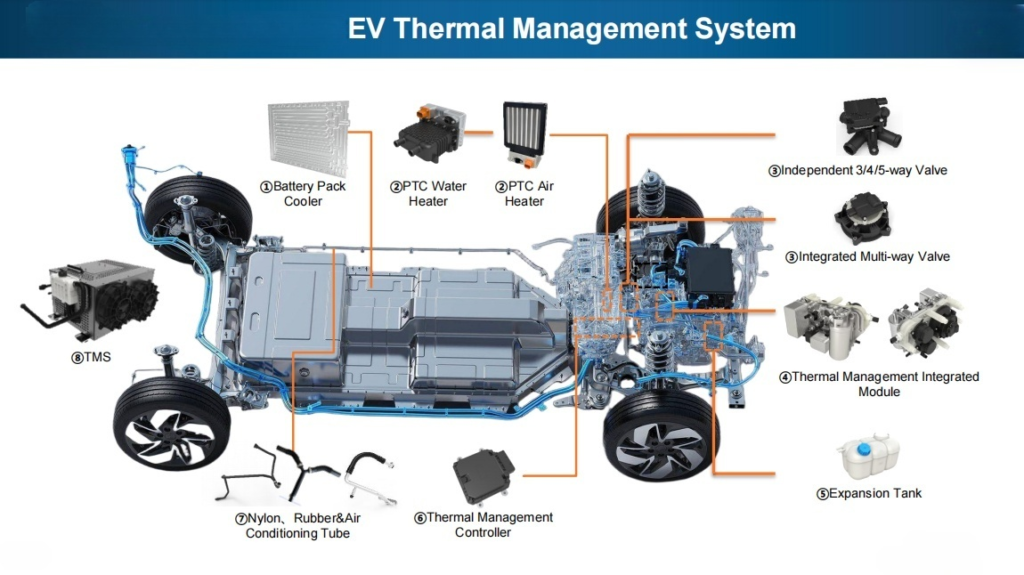
In 2026, liquid cold plates are used in many industries. Electric vehicle battery packs use liquid cold plates to keep cells at safe temperatures. Data center servers use them to cool high-power CPUs and GPUs. Power electronics like IGBT modules and inverters rely on liquid cold plates to handle extreme heat flux. Medical equipment, laser systems, and military electronics also depend on liquid cold plates for reliable thermal management.
The liquid cold plate is very important because modern electronics produce more heat than ever before. A CPU in a data center can generate over 300 watts of heat. An EV battery pack can produce thousands of watts during fast charging. Without a good liquid cold plate, these systems would overheat, fail, or even catch fire. The liquid cold plate keeps temperatures stable, which helps electronics work better and last longer.
Tip: Check the liquid cold plate and cooling system often to stop sudden problems and protect expensive equipment.
How Does a Liquid Cold Plate Work
A liquid cold plate is very important in the liquid cooling system. It keeps electronics and batteries from getting too hot. The liquid cold plate uses coolant fluid to take heat away from heat sources. This helps stop thermal damage and keeps the system working well. Knowing how a liquid cold plate works helps engineers find problems early and keep their systems in good shape.
Main Components
A liquid cold plate has many parts that help it work. Each part helps the cooling system do its job.
Base Plate and Cover
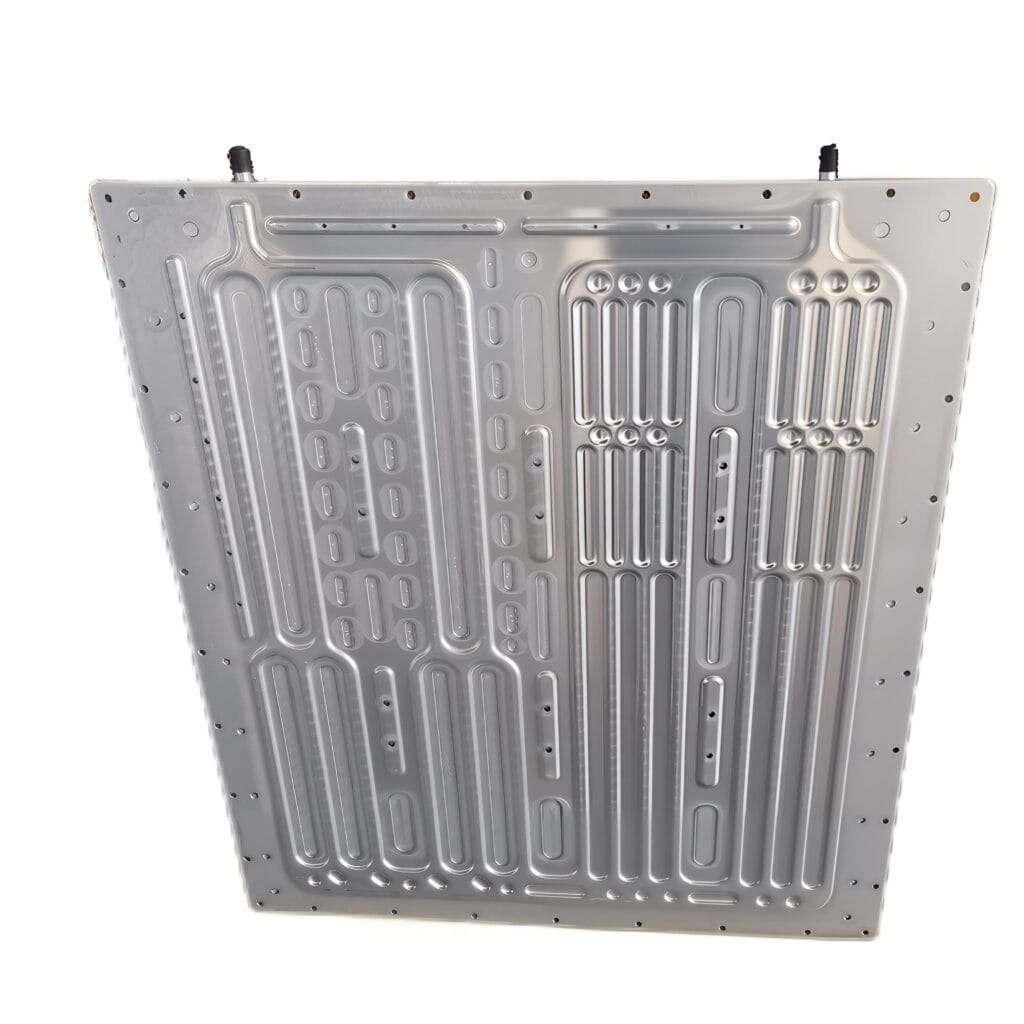
The base plate is the main surface that touches the heat source. It is usually made from aluminum or copper because these metals move heat very well. The cover seals the top of the liquid cold plate and creates the closed channel structure. Together, the base plate and cover form the internal flow path where coolant travels. Precision machining ensures the base plate is flat and smooth for good thermal contact with electronic components.
Internal Channels
Internal channels are cut or formed inside the liquid cold plate. These channels guide the coolant fluid through the plate. The channel design is very important for cooling performance. Straight channels are simple and easy to make. Serpentine channels create longer flow paths for more heat absorption. Micro-channels with widths under 1mm increase surface area and turbulence, improving heat transfer by 30–50%. Pin-fin structures inside the liquid cold plate create more surface area for coolant to touch, making cooling even better.
Inlet and Outlet Ports
Inlet and outlet ports let coolant enter and leave the liquid cold plate. The inlet port brings cool fluid from the chiller or pump. The outlet port sends heated fluid back to the heat exchanger or radiator. Port size and placement affect flow distribution and pressure drop. Good port design makes sure coolant spreads evenly across all channels instead of taking the shortest path.
Thermal Interface Material (TIM)
Thermal Interface Material (TIM) Thermal interface material sits between the heat source and the liquid cold plate base. TIM fills tiny air gaps that would otherwise block heat flow. Common TIM types include thermal grease, phase-change materials, and thermal pads. The right TIM can improve heat transfer by 10–20% compared to dry contact. Engineers must choose TIM that matches the operating temperature and pressure of the liquid cold plate system. Tip: Always check the thermal interface material during maintenance. Old or dry TIM can make the liquid cold plate work much worse.
Heat Exchange Process
The heat exchange process shows how a liquid cold plate works. Heat from the electronic component or battery cell moves into the base plate by conduction. The base plate spreads this heat across its surface. Coolant fluid flows through the internal channels and absorbs the heat by convection. The heated coolant then leaves through the outlet port and travels to a heat exchanger or chiller. There, the heat is released to the air or another cooling medium. The cooled fluid returns through the inlet port and the cycle continues. The performance of a liquid cold plate depends on several factors:
Coolant flow rate — Higher flow rates remove more heat but need bigger pumps.
Channel geometry — Micro-channels and pin-fins increase heat transfer surface area.
Material thermal conductivity — Copper moves heat better than aluminum but costs more and weighs more.
Temperature difference — A bigger gap between component temperature and coolant temperature improves heat removal.
Pressure drop — Complex channel designs may create too much flow resistance, requiring stronger pumps.
Types of Liquid Cold Plates
Liquid cold plates come in different types for different needs. Each type has a special design. The table below shows common liquid cold plate types, their features, and where they are used.
Liquid Cold Plate Type
Design Characteristics
Impact on Cooling Efficiency
Typical Applications
Tube-Inserted
Copper or stainless steel tubes pressed into an aluminum plate
Moderate cooling, simple construction, lower cost
LED lighting, basic power supplies, industrial controls
Gun-Drilled
Straight holes drilled through a solid metal block
Good for linear heat sources, easy to manufacture
Power bars, busbars, linear laser diodes
Micro-Channel
Channels under 1mm wide etched or machined into the plate
Excellent heat transfer, high surface area, handles high heat flux
CPUs, GPUs, IGBT modules, EV battery cells
Pin-Fin
Dense arrays of small pins inside the flow area
Maximum turbulence and surface contact, superior cooling
High-performance computing, military radar, laser systems
Vacuum-Brazed
Multiple plates brazed together to form complex internal geometry
Very high reliability, leak-free joints, complex flow patterns
Aerospace, medical equipment, EV battery packs
Friction Stir Welded (FSW)
Solid-state welding joins plates without melting
Strong joints, no filler material, good for large plates
EV battery cooling plates, energy storage systems
Most EV battery packs use vacuum-brazed or FSW liquid cold plates because they need large, reliable cooling surfaces. Data centers often choose micro-channel liquid cold plates for CPUs and GPUs that produce extreme heat in small areas. Industrial applications may use tube-inserted liquid cold plates when cost is more important than maximum performance.
Liquid Cold Plate in 2026
New Technologies
Engineers have made many new changes to liquid cold plate designs in 2026. Aluminum alloys with improved thermal conductivity are now used more than standard materials. These alloys move heat faster while keeping weight low. Some liquid cold plates use copper-aluminum composite designs. Copper bases touch the heat source for better conduction, while aluminum channels reduce weight and cost. Graphene-enhanced coatings are being tested to further improve heat spreading across the liquid cold plate surface. Smart liquid cold plates use embedded temperature and flow sensors to watch performance in real time. AI controllers adjust coolant flow rates based on actual heat loads rather than running at full speed all the time. This saves pump energy and reduces wear on the liquid cold plate system. Some advanced designs use phase-change coolants that absorb extra heat during brief power spikes without needing bigger pumps or radiators. Additive manufacturing (3D printing) now allows liquid cold plates with internal geometries that were impossible to machine traditionally. Complex lattice structures inside the liquid cold plate create more surface area for heat transfer while keeping pressure drop low. Companies like Boyd Corporation and Cooler Master are developing 3D-printed liquid cold plates for aerospace and high-performance computing where every gram and watt matters. Note: Two-phase liquid cold plates using evaporative cooling are being developed for next-generation AI processors that may exceed 1,000 watts per chip.
Environmental Impact
New liquid cold plate systems help reduce environmental harm. Many manufacturers now use lead-free brazing materials and recyclable aluminum alloys. Lightweight liquid cold plates in EVs help cars weigh less. Lighter vehicles use less electricity and produce less CO2 over their lifetime. Efficient liquid cold plates in data centers allow servers to run at higher power densities, reducing the total number of buildings and cooling infrastructure needed. Closed-loop liquid cooling systems reuse coolant fluid instead of consuming water like traditional evaporative cooling towers. This is very important in areas with water shortages. Some liquid cold plate systems now use biodegradable coolant fluids made from plant-based glycols instead of petroleum products. These changes help meet strict environmental rules and corporate sustainability goals.
Key environmental benefits of modern liquid cold plates:
Lower system weight reduces energy consumption in EVs
Higher cooling efficiency reduces overall data center power usage
Closed-loop designs minimize water consumption
Recyclable materials support circular economy goals
Longer component life reduces electronic waste
Electric Vehicles and Data Centers
Electric vehicles and data centers are the two biggest growth areas for liquid cold plate technology in 2026. These applications have special cooling needs that air cooling cannot meet. EV Battery Cooling: EV battery packs must keep all cells between 20°C and 40°C for safety and long life. A liquid cold plate sits under or between battery modules to absorb heat during driving and fast charging. Uneven cooling can create hot spots that degrade cells faster or cause thermal runaway. Modern EV liquid cold plates use flow balancing designs to ensure every cell gets the same cooling. Some designs integrate the liquid cold plate directly into the battery pack structure, saving space and weight. Data Center Cooling: A single server CPU can now produce over 300 watts, and AI training GPUs may exceed 700 watts. Air cooling cannot remove this much heat from such small areas. Direct-to-chip liquid cold plates mount on top of processors, bringing coolant close to the heat source. This allows data centers to pack more computing power into each rack, reducing real estate and construction costs. Immersion cooling systems use larger liquid cold plates or even submerge entire servers in dielectric fluid for extreme density. Power Electronics: IGBT and SiC power modules in EV inverters and charging stations need liquid cold plates to handle rapid switching losses. These modules can reach heat fluxes of 200–500 W/cm², far beyond air cooling limits. The liquid cold plate must also handle thermal cycling as the vehicle accelerates and brakes, which creates expansion and contraction stress on joints. Tip: Check and care for liquid cold plate systems in EVs and data centers on a strict schedule. This keeps the system safe and helps batteries and processors last longer.
Common Problems
Overheating
Overheating is a problem many users face with liquid cold plate systems. This often happens when the liquid cold plate gets clogged. Dirt, debris, or corrosion products can build up inside channels over time. These block the coolant from moving through the liquid cold plate freely. When coolant cannot flow, heat stays in the electronic component. The system then gets hot very fast and parts can get damaged. CPUs may throttle performance, batteries may degrade, or power modules may fail. Sometimes, parts break and cause overheating too. If the pump stops working, coolant will not move through the liquid cold plate. This makes the system overheat quickly. A thermostat or flow sensor that fails may stop coolant from reaching the liquid cold plate. Fans or heat exchangers that do not work properly mean less heat leaves the cooling loop. This is worse in hot environments. Not taking care of the system, like using old coolant or not cleaning filters, makes overheating more likely. Checking and flushing the system often helps stop overheating and keeps the liquid cold plate working safely.
Leaks and Corrosion
Leaks and corrosion are big problems for liquid cold plate systems. Coolant leaks leave puddles under equipment or inside enclosures. These puddles may be clear, colored, or oily depending on the coolant type. Corrosion looks like pitting, discoloration, or white powder on the liquid cold plate surface or nearby parts. Cracked O-rings, loose fittings, or a damaged liquid cold plate seal can also cause leaks. If coolant leaks out, the liquid cold plate cannot stay full and cooling stops. White residue around ports or fittings can mean a slow leak. Hissing sounds from the liquid cold plate or pump can mean a leak or cavitation. Users might see bubbles in the coolant reservoir. Corrosion makes the liquid cold plate channels rough and narrow, which blocks flow and reduces heat transfer. If you need to add coolant a lot or the level drops fast, the liquid cold plate may be failing. Fixing leaks and corrosion early can save money and stop bigger damage to expensive electronics.
Warning Signs
Knowing the warning signs of a failing liquid cold plate can save the system. If the temperature monitoring shows sudden spikes or hot spots, the liquid cold plate or cooling loop is having trouble. Coolant leaks under or around equipment show there may be damage. Steam or mist from the system means coolant is hitting hot surfaces. Users may smell a sweet or chemical odor if coolant is leaking. Low coolant in the reservoir needs to be checked immediately. System alarms for high temperature or low flow should not be ignored. Strange sounds like gurgling, grinding, or high-pitched whining from the pump can also mean trouble. Watching for these signs and getting help early can stop overheating and component failure. Tip: Check the liquid cooling system often and fix problems fast. This helps stop overheating and makes the liquid cold plate last longer.
Maintenance Tips
Inspection and Cleaning
Checking and cleaning the liquid cold plate system keeps it working well. Users should look for leaks, corrosion, or loose fittings during checks. Finding problems early can stop bigger repairs later. Cleaning the external surface of the liquid cold plate removes dust and debris that block heat transfer to the air (in systems with air-cooled heat exchangers). Users need to check coolant levels often and keep them at the right mark. They should also look at hoses and tubes for cracks or damage and change them if needed. Cleaning or replacing inlet filters prevents debris from entering the liquid cold plate channels. Doing these things helps the cooling system work better. Tip: Clean filters every month and check the liquid cold plate surface for corrosion every quarter, especially in harsh environments. Inspection and Cleaning Checklist:
Check for leaks, corrosion, or loose fittings.
Clean the liquid cold plate surface and external fins if present.
Look at coolant level and fill if low.
Check hoses, tubes, and O-rings and change if they are bad.
Clean or replace inlet filters to protect liquid cold plate channels.
Verify pump operation and flow rate readings.
Coolant Replacement
Coolant fluid wears out over time. Old coolant cannot protect the liquid cold plate and system as well. Users should flush and change coolant fluid when the manufacturer recommends. The right coolant stops corrosion and buildup inside the liquid cold plate. High operating temperatures, mixed metals in the loop, or long run times can make coolant wear out faster. Checking coolant pH and conductivity every month helps stop internal corrosion. Fresh coolant with proper inhibitors helps the liquid cold plate last longer and saves money on repairs.
Change coolant fluid when the system manufacturer says.
Only use the right coolant type for your liquid cold plate materials.
Check coolant condition every month.
Change coolant more often in tough operating conditions. Note: New coolant with corrosion inhibitors keeps the liquid cold plate safe and helps the whole system last longer.
Professional Service
Some jobs need an engineer’s help. Thermal engineers have special tools and know how to fix hard problems. They can do thermal imaging to find hot spots on the liquid cold plate, pressure test the system for leaks, and flush channels that users cannot reach. Getting help from a pro lowers the chance of mistakes or damage to sensitive electronics. Many service providers give warranties for their work, which helps users feel safe. Professional service may cost more at first but can stop bigger problems later. For hard problems or if users are not sure, going to a trusted thermal management specialist is best.
Engineers use thermal cameras and flow meters for good diagnostics.
They do things like pressure tests, ultrasonic cleaning, and welding repairs.
Service providers often give warranties for their work.
Expert help makes the liquid cold plate and cooling system last longer. Tip: Get help from a pro for leaks, persistent overheating, or if you are not sure about any part of the liquid cold plate system.
Liquid Cold Plate Manufacturing
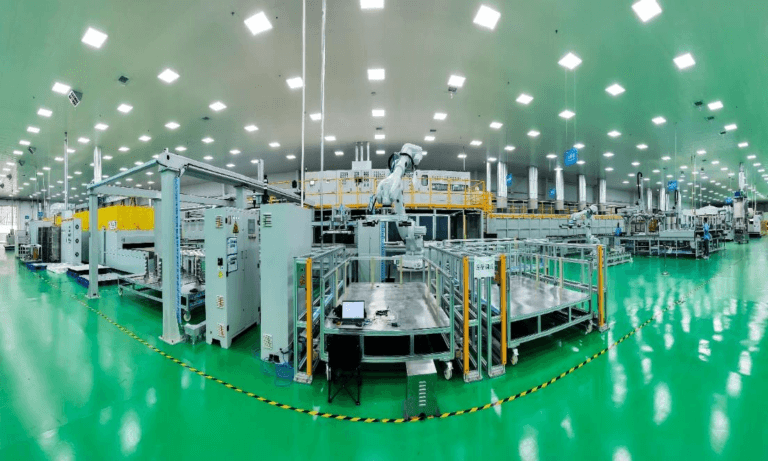
Modern Equipment
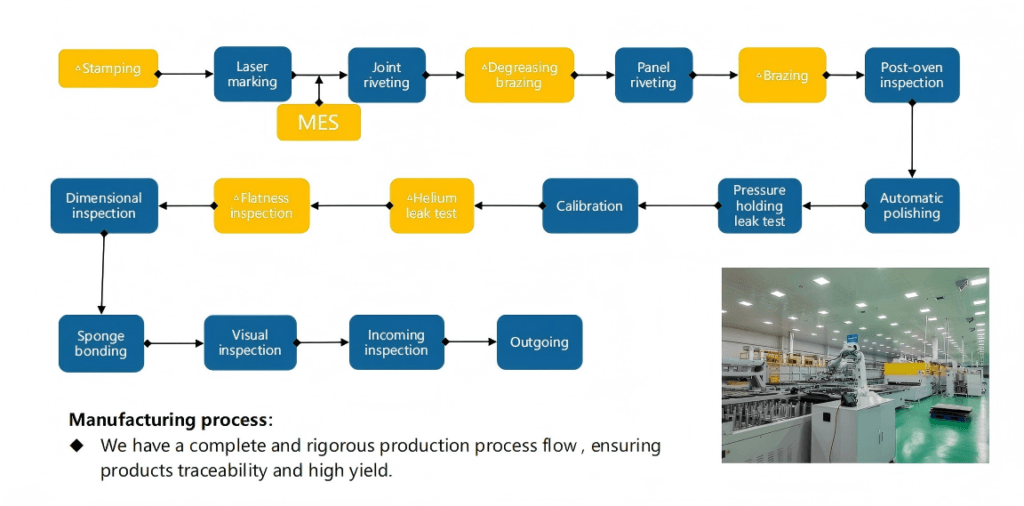
Liquid cold plate manufacturing has changed a lot over time. Early liquid cold plates used simple drilled holes in metal blocks. In the 1990s, vacuum brazing became popular for making complex internal channels with reliable joints. CNC machining allowed precise channel geometries for better cooling performance. Friction stir welding (FSW) now joins large aluminum plates without melting, creating strong joints for EV battery liquid cold plates. Additive manufacturing is opening new possibilities for internal structures that optimize flow and heat transfer. Heat exchanger and liquid cold plate production now uses advanced quality control. Helium leak testing finds tiny leaks that water tests miss. Thermal imaging checks for even heat distribution across the liquid cold plate surface. CMM (Coordinate Measuring Machine) inspection ensures channel dimensions match design exactly. All these steps make sure each liquid cold plate performs as promised.
Equipment Type
Function and Features
CNC Machining Centers
Mill precise channels and surface profiles in aluminum or copper plates.
Vacuum Brazing Furnaces
Join multiple plates with filler metal in controlled atmosphere for leak-free bonds.
Friction Stir Welding Machines
Solid-state weld large liquid cold plates without defects or distortion.
Helium Leak Detectors
Find microscopic leaks with sensitivity to 10⁻⁹ mbar·l/s.
Thermal Test Chambers
Validate liquid cold plate performance under real operating conditions.
CMM Inspection Systems
Verify dimensional accuracy of channels and mounting surfaces.
Additive Manufacturing Systems
3D print complex internal geometries not possible with machining.
Surface Treatment Lines
Apply nickel plating, anodizing, or coatings for corrosion protection.
Modern machines help factories make liquid cold plates faster and with fewer defects. Automation and robotics also lower labor costs and make better products. Quality checks at every step ensure each liquid cold plate meets strict standards for leak tightness and thermal performance.
Stamped Liquid Cold Plate Process Flow Chart
DAG Liquid Cold Plate Making Machine
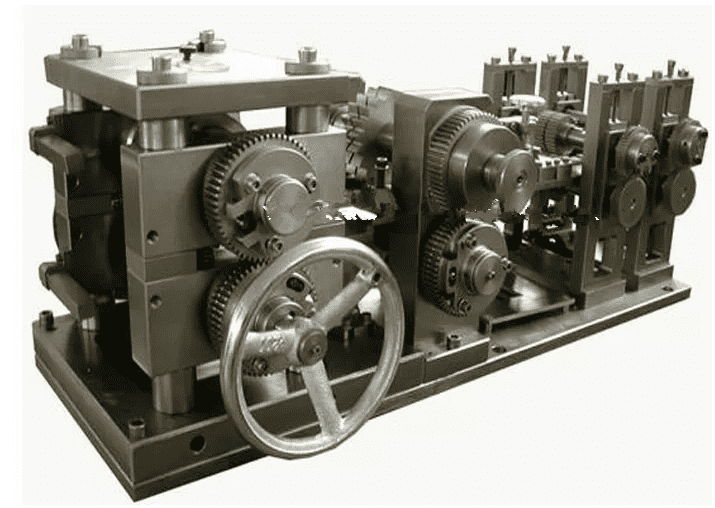
DAG is a top maker of equipment for manufacturing liquid cold plates and heat exchangers. The company builds advanced machines for making precision cooling components. DAG’s liquid cold plate machines use smart PLC controls and servo motors for exact movement. Laser cutting and CNC bending help make strong and accurate parts. The machines work with both aluminum and copper. This lets them make many types of liquid cold plates.
Supports aluminum 6061, copper C11000, and stainless steel
Plate Size Range
100mm × 100mm to 1200mm × 800mm
Channel Precision
Tolerance ±0.05mm for micro-channel features
Speed
Up to 600mm per minute machining feed rate, steady performance
Customization
Branding, labeling, and custom fixture options
User Feedback
Easy to use, low maintenance, 95% repurchase rate, 24/7 technical support
Certifications
ISO 9001 and CE certifications
DAG machines use advanced controls and automation. They have robotics, IoT monitoring, and AI quality inspection to keep production steady and stop defects. Quality checks at every step help make sure each liquid cold plate is good. The machines save energy and do not take up much space. This makes them great for many factories making cooling components.
Customization and Support
DAG gives strong customization and support to customers everywhere.
DAG makes special solutions for each customer, including custom channel designs and packaging.
The company listens to what customers need, like factory setup and material choices, to suggest the best machines.
DAG offers OEM and ODM services, free samples, and technical help.
Customers can send requests and get answers fast, often in four hours.
DAG helps customers worldwide with instructions, demos, software, and documents.
The company promises on-time delivery and 100% good machine quality.
After-sales help includes setup, training, spare parts, and warranty.
DAG’s focus on new ideas and customer care helps liquid cold plate factories build strong production lines. Their machines help make liquid cold plates that last longer and work better for electric vehicles, data centers, and power electronics.
FAQ
What does a liquid cold plate do?
A liquid cold plate takes heat away from electronics and batteries. It uses internal channels and flowing coolant to keep components cool. This stops overheating and protects sensitive equipment from thermal damage.
How often should users check the liquid cold plate?
Users need to look at the liquid cold plate and cooling system every month. Checking often helps find leaks, corrosion, or low coolant early. Professional inspection is recommended every six months for critical systems.
What are signs of a failing liquid cold plate?
Some signs are coolant leaks, temperature spikes on monitoring systems, or hot spots on the plate surface. A sweet or chemical smell, pump noise changes, or low flow readings can also mean trouble.
Can a liquid cold plate work with any coolant?
No. The liquid cold plate material must match the coolant type. Aluminum liquid cold plates need coolants with proper corrosion inhibitors. Copper liquid cold plates can use different fluids. Always check material compatibility before choosing coolant.
How long does a liquid cold plate last?
Most radiators work for 8 to 10 years. How long they last depends on how you Most liquid cold plates work for 10 to 15 years with proper maintenance. How long they last depends on coolant quality, operating temperatures, and material compatibility. Good care helps liquid cold plates last longer.
What is special about DAG liquid cold plate making machines?
DAG machines use smart controls and work by themselves. They make many liquid cold plate types and sizes with high precision. Factories use them for fast, careful, and steady production of thermal management components.
Why do modern EVs use liquid cold plates instead of air cooling?
Liquid cold plates move heat much better than air. They keep battery cells at even temperatures, which is critical for safety and long life. Air cooling cannot handle the heat from fast charging or high-performance driving.
How can users keep their liquid cold plate working well?
Users should change old coolant, clean filters, and check fittings. They need to fix leaks fast and get professional help for big problems. Taking care of the liquid cold plate keeps it strong and prevents expensive equipment damage.
WhatsApp us
Send Your Inquiry Today
Disclaimer: We promise not to automatically push advertising emails for you.
PLC Copper Radiator Fin Forming Machine
Condition:New Fin Material:Copper Speed:100 M/min Working Principle:Fin Rolling Mechanism
Side Plate Auto Forming Machine
Condition:New Workpiece specification:as per drawing’s requirement Workpiece length:100-1000mm Production capacity:180 pcs/hour Drive mode:Servo+Hydraulic+Pneumatic
150-600mm/Min Aluminium Radiator Brazing Furnace
Height Of Brazing Furnace:250mm Width Of Brazing Furnace:1000mm Mesh Belt Operating Surface Height:900mm Length Of Brazing Furnace:6000mm Working Station Size:1000mm×250mm Speed:150~600mm/min
280 M/Min High Speed Auto Radiator Fin Making Machine
Condition:New Fin Making Machine :280m/min coil inner diameter:300mm Fin cutting frequency: max 80 times/min;
Condenser Header Pipe Punching Machine
Pipe effective length: 200-650mm Slot forming time: 20 seconds per pipe Hydraulic system working pressure: 8-21Mpa pneumatic system working pressure: 0.5-0.8Mpa overall dimension: 2500mm×2100mm×2750mm
Radiator & Condenser Fin Making Machine
Core Components:PLC, Motor Condition:New Height Tolerance:+0.03mm, – 0.01mm Fin Width:8~200mm (Customized)
Radiator Fin Making Machine
Core Components:PLC, Motor Condition:New Height Tolerance:+0.03mm, – 0.01mm Fin Width:8~200mm (Customized)
Intercooler Core Assembly Machine
Core Height:350-780mm (Customized) Core Thickness:16~48mm (Customized) Clearance Between Fin & Header Plates:2mm (1.0mm) Built Core Width Error:±1.5mm
1.5 KW Radiator Plastic Tank Crimping Machine
Machine Weight:About 2100kg Radiator Core Height:100-800mm Suitable Teeth Pitch:Adjustable, Default 10mm Clinching Speed:1-20 Times Per Minute
100 M / Min Radiator Fin Forming Machine
Working speed:0-100m/min stepless control Fin height: 8±0.05mm Voltage, Power:380V/50Hz,4.5kw Protective Shield:Can Be Customized Programmable:Yes
Radiator Core Builder Machine
Conditions:NEW Fin & Tube Collocating Time:1 Second Per Collocation Voltage, Power:380V 50Hz ≤13Kw Applicable Core:Radiator Core, Condenser Core